Packaging plays an important role in protecting products, supporting transportation, maintaining product quality and communicating a brand's identity. When selecting packaging materials, businesses often face a common decision: plastic or paper?
There is no single material that is automatically the right choice for every application. The better option depends on the product, required strength, moisture exposure, shelf life, handling conditions, printing requirements, logistics and end-of-life considerations.
A practical packaging decision should therefore look beyond appearance and focus on performance, suitability and the full life of the package.
Start with the product
The first question should not be “Which material is better?” It should be “What does the packaging need to do?”
A package may need to protect the product from moisture, dust, oxygen, abrasion, compression or contamination. It may also need to withstand stacking, transportation and repeated handling.
Product weight, dimensions, shape, moisture sensitivity, grease exposure, temperature conditions, shelf life, transportation distance, storage conditions and handling frequency all influence the final packaging choice.
Understanding these requirements first makes material selection more practical and helps businesses avoid choosing packaging based only on appearance or general assumptions.
When plastic packaging can be the better choice
Plastic can be an effective solution where flexibility, strength and moisture resistance are important. Different plastic grades can be selected according to the application, including polyethylene-based formats such as LDPE and HDPE, as well as polypropylene where its particular properties are suitable.
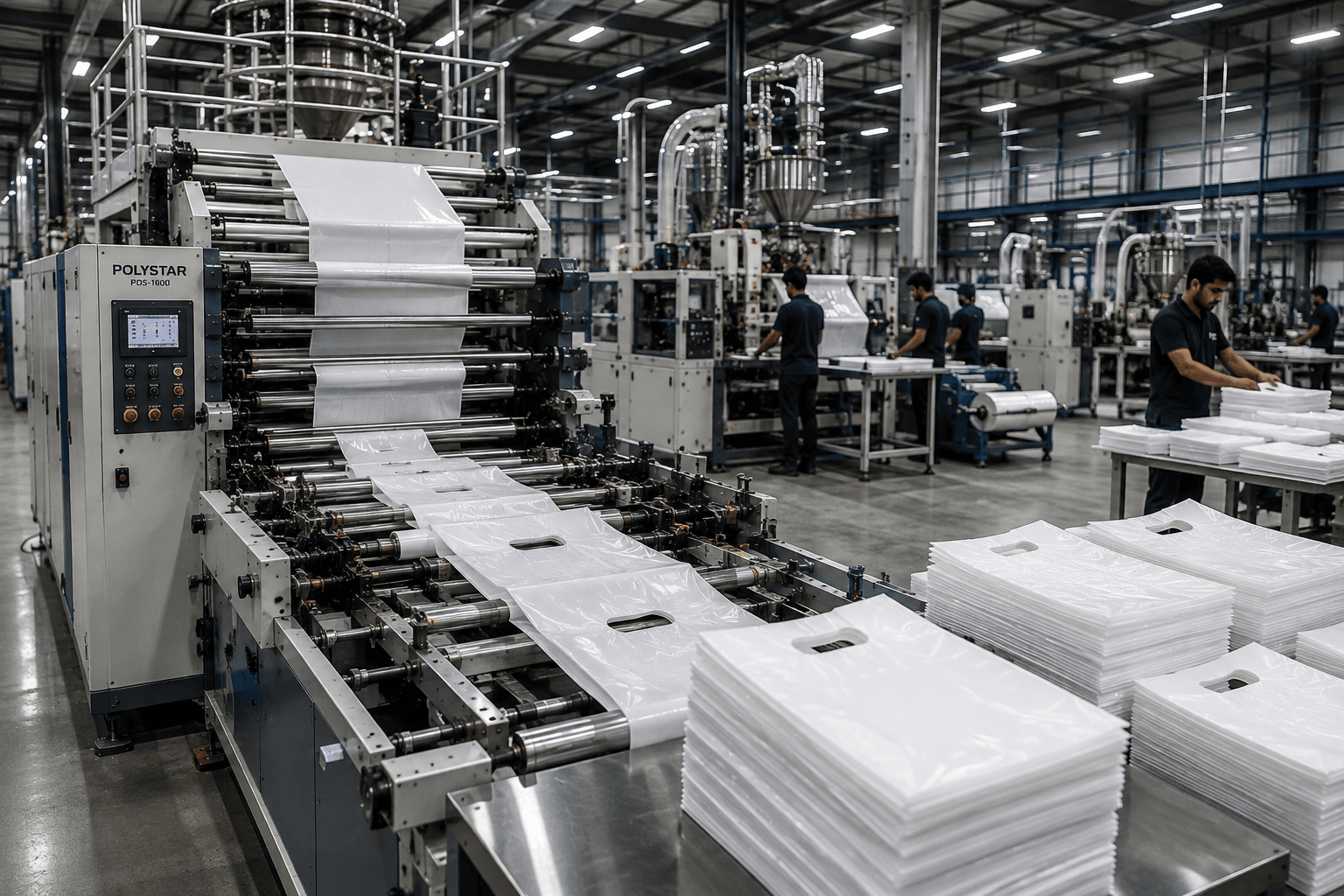
Plastic packaging can be produced as bags, films, rolls, tubing, sheeting, liners, flexible pouches and printed packaging. One of its major advantages is its ability to provide useful packaging performance with relatively low material weight.
For applications where moisture resistance is important, a suitable plastic structure can help protect products from humidity and liquid exposure. Plastic can also be useful where flexible construction, transparency or resistance to demanding handling conditions is required.
However, selecting plastic should not simply mean choosing the thinnest possible material. The specification should provide the required performance while avoiding unnecessary material use.
When paper packaging can be the better choice
Paper packaging can be an attractive option when printability, presentation, rigidity and a paper-based format are important. Paper bags are widely used across retail, food service and general handling applications.
Paper can provide a strong brand presentation and a natural tactile appearance while offering an excellent surface for printed logos, colours, product information and promotional messaging.
A kraft paper bag, for example, creates a very different visual and tactile experience from a transparent plastic bag. This means the choice between materials can also influence how customers perceive a brand.
For retail businesses, paper packaging can therefore serve both a practical function and a branding purpose.
Consider moisture and environmental conditions
One of the biggest differences between paper and plastic is their response to moisture. Paper can absorb moisture and may lose strength when exposed to wet conditions, while plastic is generally more resistant to water and humidity.
If packaging is used around refrigerated products, wet products, condensation, outdoor transportation, humid storage areas, liquids or greasy products, moisture resistance should be treated as an important part of the specification.
Paper-based packaging can sometimes be designed or treated to provide additional resistance depending on the intended application. The important consideration is to match the packaging structure to the actual environment in which it will be used.
Think about strength and load requirements
Packaging needs to withstand the forces placed on it throughout its entire use cycle. A carrier bag, for example, may experience loading, lifting, carrying, movement, storage and repeated handling before it reaches the end of its useful life.
The required strength depends on the product weight, bag dimensions, handle design, material specification and overall construction.
For paper bags, paper grade, basis weight, handle construction and bottom configuration can influence performance. For plastic bags, polymer type, gauge, dimensions, sealing method and bag configuration can affect strength.
This is why packaging should be specified as a complete system rather than selecting a material in isolation.
Branding and printing requirements
Packaging is often one of the most visible physical touchpoints between a business and its customers. Both plastic and paper can support printed branding, but they offer different visual characteristics.
Paper provides a strong print surface for logos, brand colours, product information, promotional messaging, typography and illustrations. Plastic films can also support detailed printing and can be produced in different finishes and formats.
The amount of artwork, print coverage, colour requirements, surface finish and desired brand positioning should all be considered when selecting the packaging material.
For premium retail applications, the tactile quality of the packaging can be just as important as the printed artwork.
Consider the supply chain
Packaging does not exist only at the point of sale. It moves through manufacturing, storage, transportation, distribution and retail handling before reaching the customer.
Storage space, order quantities, transportation requirements, reorder frequency and handling conditions can all affect the suitability of a packaging format.
Packaging that performs well during production but creates unnecessary storage or logistics challenges may not be the most efficient solution overall.
A well-planned packaging specification should therefore consider the entire supply chain rather than focusing only on the finished package.
Sustainability requires a wider view
Sustainability is increasingly influencing packaging decisions, but it is important to avoid reducing the discussion to the idea that paper is always sustainable and plastic is always unsustainable.
The environmental performance of packaging depends on factors such as material quantity, manufacturing processes, product protection, transportation requirements, packaging lifespan, reuse potential, recycling infrastructure and waste-management systems.
Effective packaging can help protect products and reduce damage and waste. At the same time, unnecessary packaging material can increase resource consumption.
The objective should therefore be to select the right amount and type of packaging for the application.
Recyclability depends on the packaging structure
The recyclability of packaging is not determined solely by whether it is made from paper or plastic.
Paper packaging can be affected by coatings, laminations, adhesives, inks, food contamination and mixed-material construction. Plastic packaging can also be affected by polymer type, additives, laminations, printing and the recycling infrastructure available in the market where the packaging is used.
Businesses should therefore consider the actual packaging specification and available waste-management system rather than relying only on broad material categories.
Food packaging requires additional considerations
For food-contact packaging, material selection requires additional attention. Packaging should be selected according to the intended food type, contact conditions and applicable requirements.
Factors such as direct food contact, dry or wet food, fatty or oily products, temperature exposure, storage duration and applicable regulatory documentation can influence the appropriate packaging choice.
Businesses purchasing food-contact packaging should obtain the relevant technical and compliance documentation from their packaging supplier.
Cost should be evaluated beyond unit price
The cheapest package per unit is not always the lowest-cost packaging solution.
A complete cost assessment can consider material, printing, production, transportation, storage, handling and waste-related factors. A lightweight package may reduce transportation requirements, while a stronger package may help reduce product damage or packaging failures.
Businesses should therefore evaluate the overall cost and performance of the packaging rather than focusing only on the initial purchase price.
Making the right packaging decision
The choice between plastic and paper should be based on application requirements rather than assumptions.
Plastic may be the practical choice when moisture resistance, flexibility, lightweight construction or high strength are essential. Paper may be more suitable when printability, rigidity, tactile presentation or a paper-based format are important.
In many cases, the best solution is not about choosing one material universally. It is about selecting the right specification, material grade, construction and format for the particular application.
Final thoughts
Good packaging balances protection, performance, presentation, cost and responsible material use.
Instead of asking whether plastic or paper is inherently better, businesses should ask which option provides the required performance with the appropriate amount of material and the most suitable end-of-life pathway for its market.
At Euro Poly Plast, packaging specifications can be developed around the intended application, from films, rolls and bags to printed and custom-configured packaging formats. The objective is simple: provide packaging that performs reliably while meeting the practical requirements of the product and brand.